

Discover the Power of Ashwagandha for a Healthier You
Okay, picture this: It’s the night before a big exam, your brain’s a mess, and you’re stressing out big time. Sounds familiar, right? That’s when my cousin told me about ashwagandha. She was like, “Dude, this herb is a total game-changer!” I thought she was exaggerating, but now I’m kinda obsessed with figuring out what this thing is. So, grab a chai (or whatever you’re sipping), and let’s talk about why ashwagandha is blowing up everywhere.
Ashwagandha is this small plant with funky yellow flowers that grows in India, Africa, and some other places. Its roots are the real MVPs—they get turned into powders, pills, or teas that people use to chill out or boost their energy. In India, it’s been a star in Ayurveda (you know, our ancient medicine system) for, like, forever—think 3,000 years! They call it a “Rasayana,” which basically means it keeps you feeling young and strong. Cool, huh?
In this article, I’m spilling all the tea on ashwagandha—what it does, why it’s awesome, and if it’s safe. I did some digging (yep, actual research, not just Google) to share legit facts, but I’ll keep it chill, like I’m chatting with my besties. Ready to find out why ashwagandha’s got everyone buzzing? Let’s go!
Test Your Knowledge
What Even Is Ashwagandha?
So, ashwagandha isn’t some new TikTok trend—it’s old-school, like really old. The name’s kinda funny: ashwa means horse, and gandha means smell in Sanskrit. Some say it’s because the roots smell weird, like a horse (eww), or maybe it makes you strong like one. I’m not sure which, but it’s been used in India for ages to fix all sorts of problems.
This plant loves hot, dry places like Rajasthan or parts of Africa. The roots are usually dried and ground into a powder, but you can also find it in capsules or as a tea. My aunt mixes the powder in her morning milk—says it’s super calming. In Ayurveda, ashwagandha’s called an adaptogen. That’s a big word, but it just means it helps your body deal with stress, like a superhero sidekick. Now, let’s get to the juicy part—what can it do for you?
Research-Based Facts on Ashwagandha
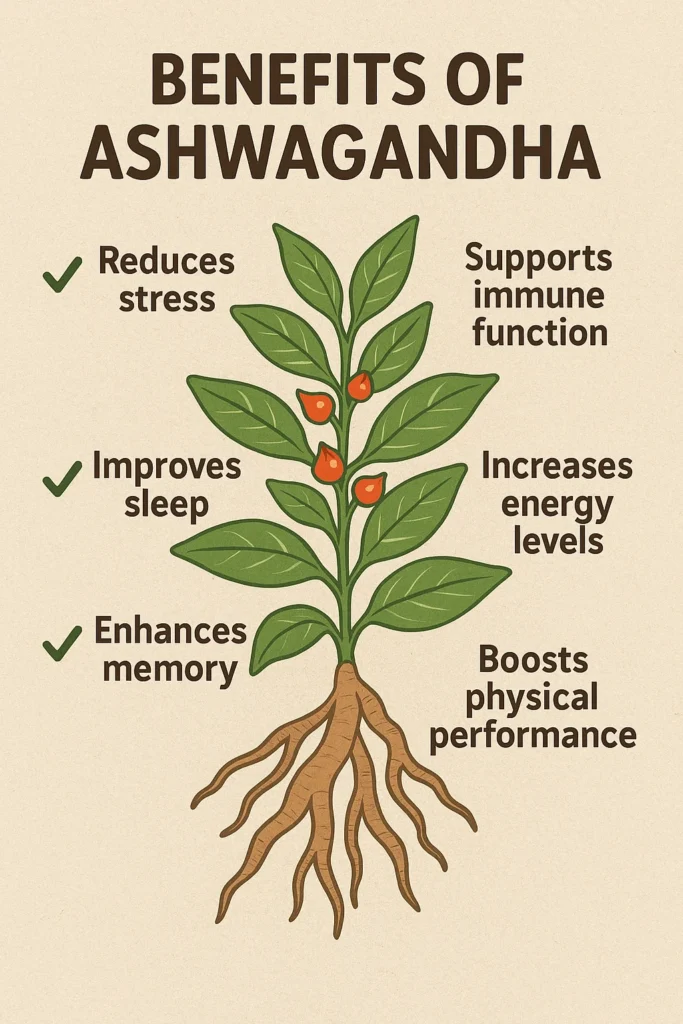
Ashwagandha, a popular herb in Ayurveda, has been studied for its health benefits, and science backs up some of its claims. A 2019 study found that taking 240 mg of ashwagandha daily for 60 days reduced cortisol levels by 44%, helping people feel less stressed. Another study showed that 600 mg daily for 12 weeks improved sleep quality in adults, with participants falling asleep faster and waking up refreshed. Research also suggests ashwagandha can boost brain function—50 adults who took it for 8 weeks scored better on memory tests. Plus, it might help with strength; a study on men showed those taking ashwagandha had stronger muscles after 8 weeks of exercise. While these facts are promising, more research is needed to confirm long-term effects, but it’s clear ashwagandha has real potential.
Why Ashwagandha’s a Total Rockstar
Ashwagandha’s got a bunch of benefits, but I’m gonna focus on the ones that matter to us students (and anyone who’s stressed, tbh). Here’s what I found after sneaking into some science-y articles:
1. Kicks Stress to the Curb
Exams, deadlines, family stuff—stress is the worst, right? Ashwagandha’s like that friend who tells you to take a deep breath. It lowers cortisol, which is this sneaky hormone that makes you feel all panicky. A study I read said people who took 240 mg of ashwagandha every day for two months felt 44% less stressed. That’s huge! It’s like the herb’s saying, “Yo, chill, I got you.”
My friend Arjun tried it during our finals, and he swears he didn’t have those usual freak-outs. I’m not saying it’s magic, but it sounds pretty dope.
2. Helps You Catch Some Z’s
If you’re like me, you spend half the night overthinking everything. Ashwagandha might help you actually sleep. Some research says it can make you fall asleep faster and wake up feeling fresh. In one study, older folks (like 65–80 years old) who took 600 mg daily for 12 weeks slept way better. Another study said it works best after 8 weeks, so don’t expect miracles overnight.
I told my mom about this, and she’s been taking ashwagandha at night. She says she’s not tossing and turning anymore. I’m tempted to try it for those late-night study marathons!
3. Gives You an Energy Boost
Ever feel like you’re dragging yourself through the day? Ashwagandha might give you a natural pick-me-up. It’s not like those energy drinks that make you crash later. Instead, it helps your body use energy smarter. Plus, it can make you stronger—yep, for real!
A study showed guys who took ashwagandha while working out got stronger muscles and better endurance. It’s also linked to higher testosterone in men, which helps with strength. My gym-bro cousin’s been using it, and he’s all, “Bro, I’m lifting heavier now!” Maybe I’ll try it for my cricket practice.
4. Makes Your Brain Sharper
Okay, this one’s my fave because I need all the brainpower I can get for math class. Ashwagandha might help you focus and remember stuff better. It’s got these compounds called withanolides that act like bodyguards for your brain cells.
In one study, 50 people who took ashwagandha for 8 weeks did better on memory tests and could pay attention longer. Imagine not forgetting those chemistry formulas! It’s not gonna turn you into Einstein, but a little brain boost? I’m in.
5. Keeps Your Heart Happy
Your heart’s working 24/7, so it deserves some TLC. Ashwagandha might help with that. Some studies (mostly on animals, not humans yet) say it can lower cholesterol and keep your heart safe. There’s also proof it might bring down blood pressure a bit, which is great for staying healthy.
My dad’s been taking it for a while, and his doctor said his blood pressure’s looking better. He’s all proud, like, “See, I told you Ayurveda works!” It’s not a cure, but it’s a nice bonus.
How Does This Herb Work Its Magic?
Alright, so ashwagandha’s doing all these cool things, but how? Let me explain it like I’m telling my little sister. When you’re stressed, your body goes into overdrive, pumping out cortisol like nothing else. Ashwagandha calms that down by working on something called the HPA axis (don’t ask me to spell it twice). It’s like the control center for stress hormones.
It’s also got antioxidants—think of them as tiny shields that protect your cells from getting beat up by stress or pollution. These help your brain, heart, and immune system stay strong. Plus, ashwagandha messes with brain chemicals like GABA (makes you calm) and serotonin (makes you happy). It’s like a big hug for your body, helping it balance out. But heads-up: it takes a few weeks to really kick in, so don’t expect instant vibes.
Is Ashwagandha Safe or Nah?
Before you go chugging ashwagandha tea, let’s talk safety. For most people, it’s fine in small doses—like 250–1000 mg a day for a couple of months. But there’s stuff to watch out for:
- Side Effects: Some folks get a tummy ache or feel super sleepy. My friend tried too much at once and felt queasy—yuck.
- Who Should Skip It?: Pregnant or breastfeeding moms, steer clear. There’s not enough proof it’s safe, and some say it might cause issues. If you’ve got thyroid problems or an autoimmune disease (like lupus), talk to a doc first—it could mess with your meds.
- Buy Smart: Not all ashwagandha’s the same. My uncle got some shady pills online, and they did nothing. Stick to brands tested by places like ConsumerLab or NSF International.
Fun fact: Denmark’s like, “Nope, no ashwagandha here!” They banned it because they’re worried it might mess with hormones or pregnancy. But there’s no hard proof, so maybe they’re just playing it safe.
Always check with a doctor before starting, especially if you’re on other pills. Don’t be that guy who takes random supplements without asking!
How to Use Ashwagandha Like a Pro
Wanna try ashwagandha? Here’s the 411 on how to do it right:
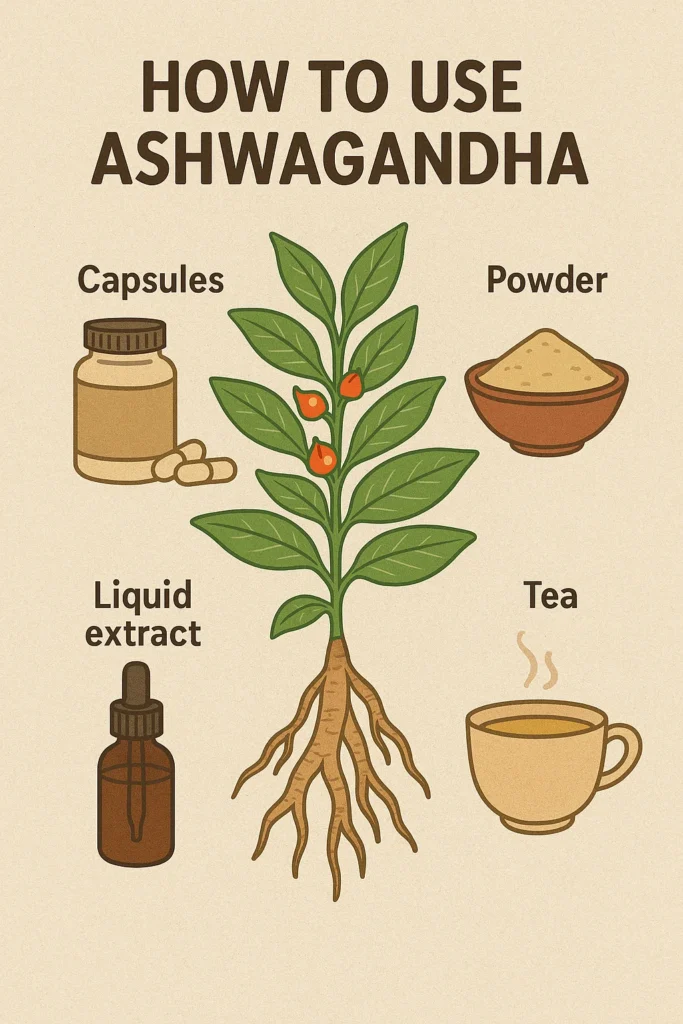
- Forms: You can get it as capsules, powder, or tea. Capsules are easy-peasy, but my grandma loves mixing the powder in warm milk with honey—she calls it her “magic potion.”
- Dosage: Studies say 250–600 mg a day is good for most people. Start with 300 mg and see how it feels. Don’t go surprised—more doesn’t mean better.
- When to Take It: Morning for energy, night for sleep. I’d probably do night because I’m a zombie after 10 p.m.
- How Long?: It’s not a quick fix. Give it 8–12 weeks to work its magic.
Pro tip: Check the label for withanolides—those are the active ingredients. More withanolides (like 2.5% or higher) means better quality. Oh, and don’t fall for super-cheap brands—they’re usually junk.
Real Talk: Does Ashwagandha Actually Work?
Okay, let’s get real—does this stuff live up to the hype? I asked around and found some stories that make me think it might.
My classmate Riya started taking ashwagandha (300 mg capsules) during our board exams. She said she felt less stressed and didn’t stay up all night worrying. She even got an A in physics, which is, like, impossible! Maybe it’s a coincidence, but she’s sold.
Then there’s my neighbor, Aunty Meena, who’s in her 40s. She takes ashwagandha for stress and says she’s sleeping better and has more energy. She’s even started yoga again, which is goals. I don’t know if it’s all the herb, but she’s glowing these days.
On X, people are hyping it up too. One guy said it helped him stay calm at work and lifted heavier at the gym. Another person said their sleep’s never been better. But some folks were like, “Meh, didn’t feel much.” So, I guess it depends on you.
Conclusion: Should You Jump on the Ashwagandha Train?
Alright, let’s wrap this up. Ashwagandha’s pretty legit—it can help with stress, sleep, energy, and even your brain, which is perfect for us students juggling school and life. Science says it can cut stress by 44% or improve sleep in 8 weeks, which is no joke. But it’s not a miracle pill. Some people might not notice a difference, and it’s not safe for everyone, like pregnant folks or those with certain health issues.
If you’re curious, talk to a doctor and start small. I’m honestly thinking of trying it for those study nights—wish me luck! Ashwagandha’s been around for thousands of years, so it’s gotta have something going for it, right? What do you think—gonna give it a shot or just stick to chai for now? Let’s keep finding ways to stress less and live more!
FAQs About Ashwagandha
1. What is ashwagandha good for?
It’s known to help with stress, sleep, energy, and focus. Some also use it to support heart health and muscle strength.
2. How much ashwagandha should I take?
Most studies suggest 250–600 mg daily. Start small, like 300 mg, and check with a doctor to be safe.
3. Can ashwagandha cause side effects?
Sometimes! A few people get an upset stomach or feel sleepy. If you notice anything weird, stop and ask a doctor.
4. Is it safe for everyone?
Not really. Pregnant women, people with thyroid issues, or those on certain meds should avoid it unless a doctor says okay.
5. How long does it take to work?
You might need 8–12 weeks to feel the full benefits, like better sleep or less stress. Patience is key!
#Ashwagandha, #StressRelief, #Ayurveda, #NaturalHealth, #HerbalRemedy, #SleepBetter, #EnergyBoost