
The Holy Tulsi Plant: Stories, Medicine, and Daily Life
If you have ever visited any Indian home, you might have seen a Tulsi plant. Called “holy basil” in English, Tulsi isn’t just a simple plant—it stands for cleanliness, good health, and deep faith. Let’s learn about its stories from Hindu beliefs, its use in old Indian medicine (Ayurveda), and how it can help with common health problems.
Tulsi in Hindu Beliefs: Plant with a Divine Story
In Hindu culture, people worship Tulsi like a goddess. One popular story says Tulsi (also called Vrinda) was a loyal wife. Her husband, a demon king named Jalandhar, was so powerful that no one could defeat him—all because of Vrinda’s pure heart. But Lord Vishnu, a major Hindu god, tricked Vrinda into breaking her promise to stay loyal. Because of this, Jalandhar lost his power and died. Heartbroken, Vrinda cursed Vishnu to become a stone. To honor her, Vishnu turned her into the Tulsi plant, saying its leaves would always be used in prayers for him.
Test Your Knowledge
Another tale says Tulsi grew from the tears of Lord Krishna when he missed his beloved Radha. Because of these stories, many Hindu families grow Tulsi at home, believing it cleans the air and keeps evil away. During festivals like Diwali, people light lamps near Tulsi and pray to it.
Grief-stricken, Vrinda cursed Vishnu to turn into a stone (the Shaligram stone). To honor her, Vishnu declared she would become the sacred Tulsi plant, and her leaves would be essential in worshipping him.
Another legend says Tulsi grew from the tears of Lord Krishna when he was separated from his beloved Radha. Because of these stories, many Hindu families grow Tulsi at home, believing it brings divine protection and purifies the environment. During festivals like Diwali, people light lamps near Tulsi plants and offer prayers.
Tulsi in Ayurveda: The Natural Healer
Ayurveda, India’s old-school natural medicine, calls Tulsi the “Queen of Herbs” because it helps balance three key energies in our body—Vata, Pitta, and Kapha (think of these as your body’s “settings” for staying healthy). Even modern science agrees! Tulsi is loaded with stuff like antioxidants (which fight damage in your body), anti-inflammatory goodies (that calm swelling), and a special oil called eugenol, which gives it that strong smell.
What Can Tulsi Do for You? Here’s What Science Says
- Fights Stress: Studies say Tulsi works like a “stress shield.” A 2017 report in a health journal found it helps your body deal with anxiety and pressure.
- Supercharges Immunity: Its germ-fighting powers can tackle infections. Research from 2014 in an Ayurveda journal shows it kills bacteria and viruses.
- Lung Friend: Got a cough or cold? Tulsi thins mucus and calms your throat. A 2020 study even said it’s useful for asthma and bronchitis.
- Heart Helper: It might lower bad cholesterol and blood pressure, keeping your heart safe (as per a 2011 study).
Tulsi Through the Ages: A Quick History
People in India have used Tulsi for over 3,000 years! Old books like the Rig Veda and Charaka Samhita (ancient Ayurvedic texts) praise it as a cure-all. When the British ruled India, they pushed Western medicines and tried to make people forget about Tulsi. But guess what? Families kept growing it in their homes anyway. Now, the world’s catching on—Tulsi’s back in the spotlight as a natural remedy for modern problems.
Here’s Why Science Loves Tulsi: Easy-to-Understand Benefits
- Calms Stress & Anxiety: A 2017 study found Tulsi works like a natural stress-buster. It helps your body stay calm when life gets overwhelming.
- Fights Germs & Infections: Got a cold or infection? Tulsi’s germ-killing powers can help. Research from 2014 says it’s great against bacteria and viruses.
- Clears Coughs & Breathing Issues: Stuffy nose or asthma? Tulsi thins mucus and eases coughs. A 2020 study even showed it helps people with lung problems like bronchitis.
- Protects Your Heart: Studies say Tulsi can lower bad cholesterol and blood pressure, which keeps your heart healthy. A 2011 paper called it a heart hero!
Types of Indian Tulsi
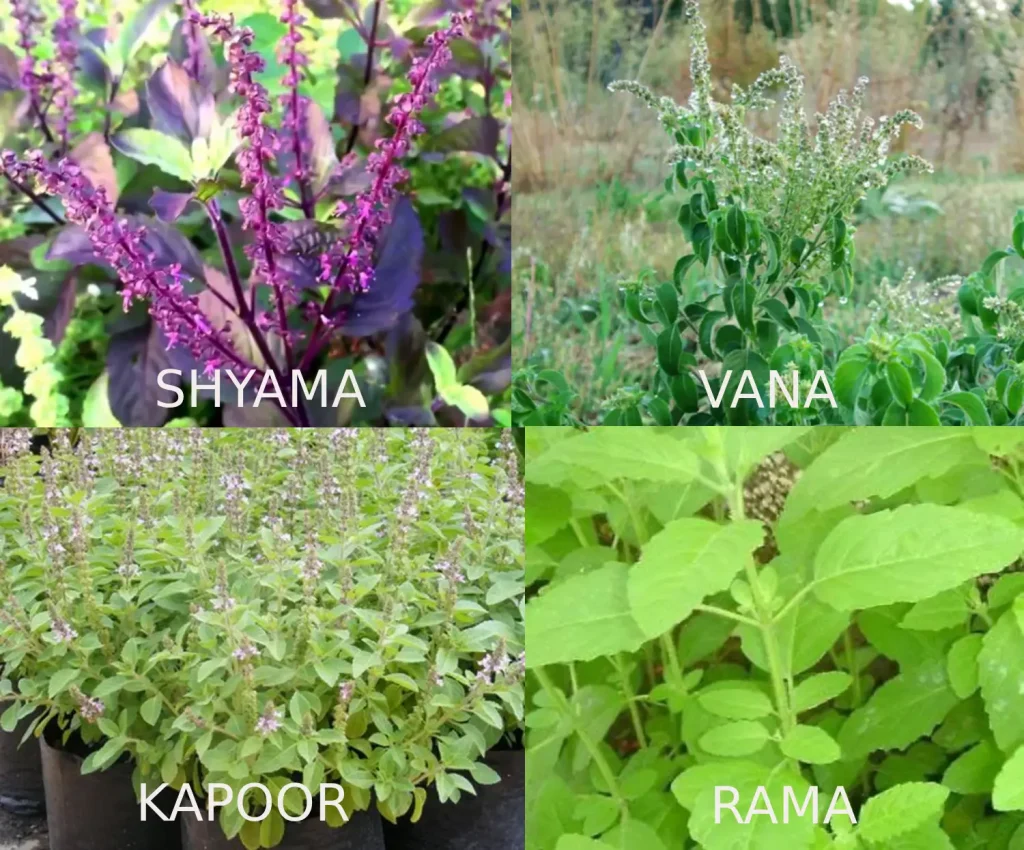
Not all Tulsi is the same! Here are the main varieties:
- Rama Tulsi: Bright green leaves, mild flavor. Used in teas and religious rituals.
- Krishna Tulsi: Purple-tinged leaves, peppery taste. Preferred in Ayurvedic medicines.
- Vana Tulsi: Grows wild, strong aroma. Boosts immunity.
- Kapoor Tulsi: Small, fragrant leaves. Common in temperate regions.
Q&A: Your Tulsi Questions Answered
Q: Can I drink Tulsi tea daily?
A: Yes! 1–2 cups a day is safe for most. Overuse may lower blood sugar too much.
Q: Any side effects?
A: Rare, but excess can cause mouth ulcers. Avoid if pregnant or on blood-thinning meds.
Q: How to use Tulsi for a cold?
A: Boil 5–6 leaves in water, add ginger and honey. Drink warm.
Q: Is Tulsi the same as Italian basil?
A: No! Italian basil is for cooking; Tulsi has medicinal properties.
Q: Can pregnant women use Tulsi?
A: Consult a doctor first—it may stimulate uterine contractions.
Simple Tulsi Recipes for Common Problems
- Tulsi Tea (For Stress)
- Boil 10 fresh leaves in 2 cups water for 5 mins. Strain, add honey.
- Immunity Kadha
- Boil Tulsi, neem leaves, turmeric, and black pepper in water. Sip twice daily.
- Cough Relief Mix
- Crush Tulsi leaves with ginger juice and honey. Take 1 tsp thrice daily.
- Acne Face Pack
- Mix Tulsi paste with sandalwood and rose water. Apply, rinse after 15 mins.
Disclaimer
This article is for informational purposes only. Tulsi may interact with medications or conditions. – Always consult a healthcare expert before using herbs. Yogi Asana is not responsible for any side effects. Stay safe, stay informed!
From spiritual rituals to soothing teas, Tulsi’s versatility makes it a true gift of nature. -Whether you’re sipping a warm cup of Tulsi tea or growing it in your garden, this humble herb is a tiny power house of health and tradition. 🌿