
Parsvakonasana – Extended Side Angle Pose: A Complete Guide
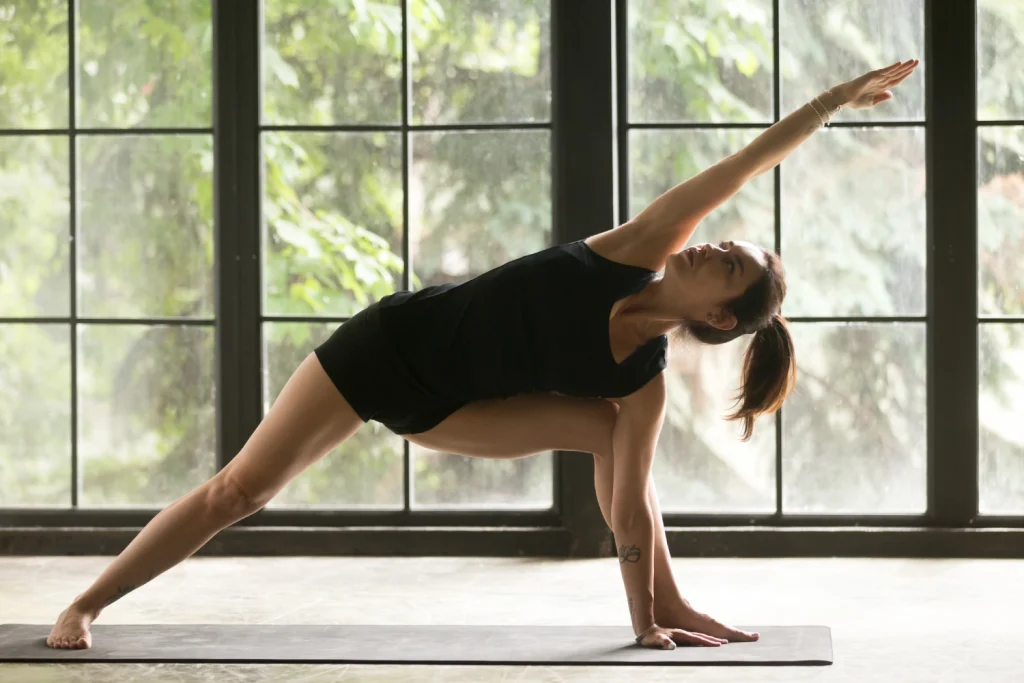
Parsvakonasana, or Extended Side Angle Pose, is a standing yoga pose. It needs strength, balance, and flexibility. It is often done in yoga types like Vinyasa or Hatha yoga. This pose helps build stamina, makes the body strong, and has many physical and mental benefits. In this guide, we will explain the benefits, how to do it, changes you can make, and tips for Parsvakonasana.
Test Your Knowledge
What is Parsvakonasana?
The word “Parsvakonasana” comes from Sanskrit. “Parsva” means “side,” “kona” means “angle,” and “asana” means “pose.” In this pose, the body makes a slanting line from the extended hand to the foot. It stretches the sides of the body, makes the legs strong, and opens the chest and hips.
Benefits of Parsvakonasana
Parsvakonasana has many good effects on the body and mind. Here are some:
- Makes Legs Strong: This pose works on the thighs, calves, and knees, making them strong.
- Stretches the Side Body: It stretches the muscles on the sides of the body, making them more flexible.
- Opens the Hips: This pose helps loosen tight hips, which is good for people who sit for long hours.
- Improves Balance: Practicing this pose helps you balance your body better.
- Helps Digestion: The twist in this pose helps the stomach and other organs work better.
- Builds Stamina: Holding the pose makes you stronger and focused.
- Reduces Stress: Stretching and breathing deeply in this pose helps calm the mind.
How to Do Parsvakonasana: Step-by-Step Instructions
Follow these steps to do Parsvakonasana:
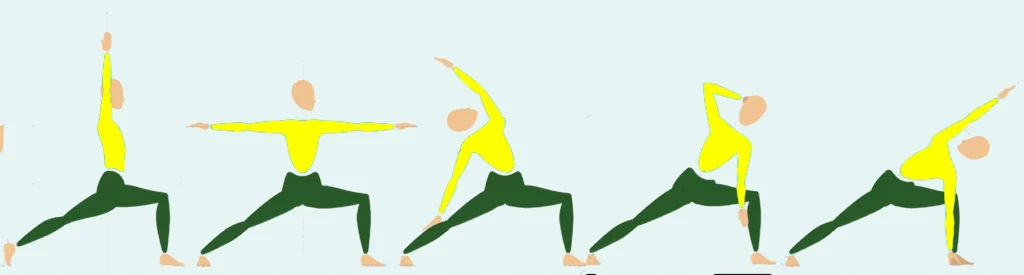
- Start in Tadasana: Stand tall with your feet together. Distribute your weight equally on both feet. Relax your shoulders.
- Step Your Feet Apart: Move your left foot back about 3 to 4 feet. Your right foot should face forward, and your left foot should turn slightly outward.
- Align Your Heels: Keep your right heel in line with the arch of your left foot.
- Bend Your Right Knee: Bend your right knee so that it is over your right ankle. Keep your left leg straight and strong.
- Lean to the Right: Bend your upper body to the right. Rest your right forearm on your right thigh or place your right hand on the floor or a block outside your right foot.
- Stretch Your Left Arm: Raise your left arm above your head. Make a straight line from your left hand to your left foot. Keep your palm facing down.
- Open Your Chest: Turn your chest upward. Look at your left hand or straight ahead.
- Use Your Core: Tighten your belly muscles to support your back and balance better.
- Hold the Pose: Stay in this pose for 5 to 10 breaths. Focus on your breathing.
- Come Back to Tadasana: Straighten your right leg, bring your body upright, and step your left foot forward. Repeat on the other side.
Modifications for Parsvakonasana
If this pose feels hard, try these easy changes:
- Use a Block: Put a yoga block under your hand if reaching the floor is difficult.
- Rest on Your Thigh: Place your forearm on your thigh instead of reaching for the floor.
- Make Your Stance Smaller: Bring your feet closer together to reduce the stretch.
- Bend Your Back Knee: Slightly bend your back knee to improve balance.
- Use a Wall: Stand near a wall for extra support.
Tips for Practicing Parsvakonasana
- Warm Up First: Do some light stretches or Sun Salutations before this pose.
- Check Your Alignment: Keep your front knee over your ankle and your back leg straight.
- Breathe Slowly: Take slow, deep breaths to stay calm.
- Move Slowly: Enter and exit the pose carefully to avoid injury.
- Practice Often: Regular practice will improve your strength and flexibility.
Common Mistakes to Avoid
- Dropping Your Chest: Keep your chest open and lifted.
- Misaligned Knee: Make sure your front knee does not go beyond your toes.
- Tense Shoulders: Keep your shoulders relaxed and away from your ears.
- Holding Your Breath: Keep breathing deeply while in the pose.
- Leaning Too Much: Do not lean too far forward as it may hurt your lower back.
Who Should Avoid Parsvakonasana?
Do not do this pose or make changes if:
- You have a knee or hip injury.
- You have high blood pressure (do not raise your arm above your head).
- You have neck pain (look forward or down instead of upward).
- You are pregnant (avoid deep twists and keep your body more upright).
Conclusion
Parsvakonasana is a good yoga pose that makes your legs strong, stretches your side body, and improves your balance. If you practice it regularly, you will become more flexible and strong. Use props and easy changes if needed. Always listen to your body, breathe deeply, and enjoy your yoga journey!