
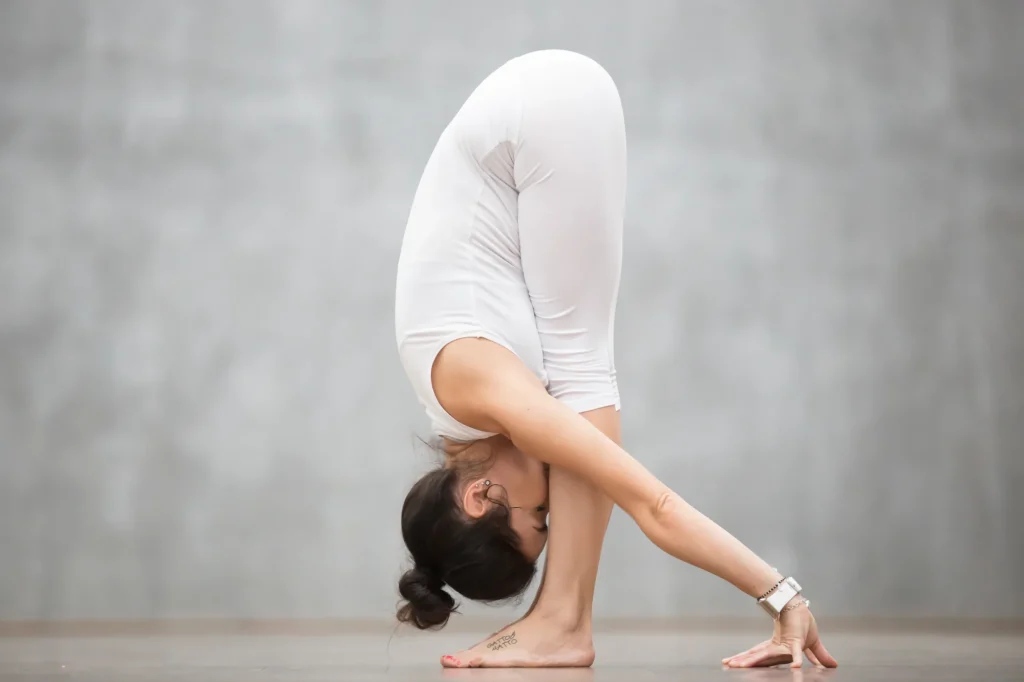
A complete yoga practice bring together body, mind and spirit. Standing Forward Bend or Uttanasana is one of the numerous poses from yoga, which is a surya namaskar pose as well and serves as a fundamental asana with its calming effects and physical advantages. In this guide, we will explore Uttanasana with step-by-step instructions, benefits, variations, precautions and tips to master the pose.
What is Standing Forward Bend (Uttanasana)?
Standing Forward Bend- Uttanasana: It’s a traditional yoga pose, that requires bending forward so that the upper body is over the legs while you are on your feet. Uttanasana is a Sanskrit word, where in English it translates to “intense stretch pose” (‘Ut’ = intense, ‘Tan’ = stretch, ‘Asana’ = pose). This asana is a fundamental posture in Yoga practice, which provides both physical and psychological refreshment.
Test Your Knowledge
How to do Uttanasana — Step by Step Guide
To practice Uttanasana safely and effectively, follow these detailed steps:
Starting Position:
Start by coming into Tadasana (Mountain Pose) and standing tall, legs hip distance apart.
Disperse your weight equally on both feet.
Pull in your core and drop your shoulders.
Inhale:
Extend your arms overhead, lengthening your spine.
It should feel like a stretch from your fingertips to your heels.
Exhale and Fold:
Hinge at your hips (not your waist) and start to fold forward.
Maintain a long spine as you descend toward your thighs.
Let your arms hang down or place your fingertips on the ground right beside your feet.
Relax:
Allow your head to hang heavy, softening tension in your neck and shoulders.
If you need to, you can bend your knees a little to prevent straining your hamstrings or lower back.
Hold the Pose:
Hold Uttanasana for 5-10 breaths — easing into the posture as you become aware of your breath.
Inhale as your outstretch your torso, then with each exhale sink your fold deeper, and closer to your thighs.
To Release:
Pull your core in and roll back up to standing one vertebra at a time.
Move back to Tadasana and take a moment to notice how your body feels.
Key Alignment Tips
Hinge at the Hips: Make sure the fold comes from your hips, not your waist, so you keep a long spine.
Knees Off: If you have super tight hams or lower back issues, keep a micro-bend in your knees.
Balance Your Weight: Distribute your weight evenly on the balls and heels of your feet.
Neutral Neck Position: Don’t crane your neck, let your head hang.
Benefits of Uttanasana
Physical Benefits
Stretches the Hamstrings and Calves: Uttanasana lengthens the back of the legs, increasing flexibility.
Strengthens Spine: Forward fold decompresses & strengthens spinal muscles.
Stimulates the Digestive System: Compression of the abdomen can help digestion.
Reduces Tension: The asana releases tension in the neck, shoulders, and lower back.
Mental Benefits
Calms Mind: It helps in relaxation while reducing stress in the body.
Improves Concentration: Uttanasana helps to heighten focus by promoting mindfulness.
Reduces Anxiety: This pose is far-famed to decrease anxiety and help with inner calmness.
Common Mistakes to Avoid
Rounding the Back: Keep the spine straight to avoid hurting yourself.
Lock the Knees: Hyperextended knees can cause injury, so always keep a slight bend.
Forced folding: do not try to pull yourself when the muscles of the strained.
Ignoring the Breath: Taking deep, controlled breaths makes the pose much more effective.
Variations and Modifications
For Beginners:
Use Props: Place yoga blocks under your hands to decrease the distance to the floor.
Get your knees bent: A slight bend of the knees makes the pose more attainable.
For Advanced Practitioners:
Deepen the Fold: Straighten your legs as fully as you can and keep your chest as close to your thighs as possible.
Padangusthasana (Big Toe Pose): For a deeper stretch, hold your big toes with your fingers.
Chair-Assisted Uttanasana:
After about 6 weeks, you may try experimenting with standing a few feet away from a chair.
Turn around and lean over the edge of the chair with your hands on it, maintaining a flat back.
Precautions and contraindications
Although Uttanasana is safe for most people, if you have any of the following conditions, you should be cautious:
Lower Back Problems: Modify with bent knees or props to avoid strain.
Pregnancy: Do not compress the abdomen; choose a wider leg position or a modified version.
Hypertension: Do the pose with the head elevated.
Recent injuries: If you are injured in the back, hips or knees, practice this pose with caution.
The Reasoning Behind Uttanasana
More than a physical exercise, Uttanasana is a symbolic gesture of surrender in yoga philosophy. Folding forward, practitioners bow to the universe figuratively, surrendering to ego and embracing humility. This pose is inward facing which tends to take you inward, and bring you back into your body and mind.
How to Include Uttanasana in Your Practice
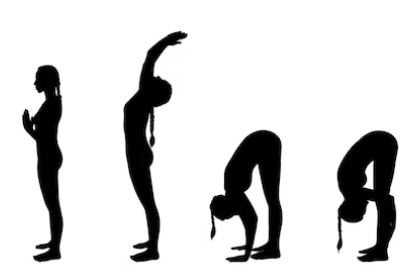
Uttanasana is versatile and can be applied to any yoga sequence:
Use it as a warm-up : Prepare your body for deeper stretches.
In Sun Salutations: It acts as a crucial transition in such sequences as Surya Namaskar.
For Cool-Downs: Conclude your practice with Uttanasana to stretch out the muscles.
Reference Pose: Use as a quick stress reliever when you’re in a pinch.
Tips for Mastery
Stay Consistent: Get more flexible: The more it becomes habit, the deeper you go in the pose.
Listen to Your Body: Don’t look at others, look at yourself.
Use Props Wisely: Be unafraid to use blocks or straps in poses for better alignment.
Breathe Mindfully: Each movement can be synchronized with your breath for a meditative practice.
Conclusion
Uttanasana (Standing Forward Bend) is a vigorous yet relaxing yoga pose that yields benefits for both the body and the mind. Kamate is the pose that can be easily modified for beginners or advanced yogis. However, if there is something to be learned from the great benefits of Uttanasana, it is to flow with the situation and what stands hand in hand would be mindfulness coupled with alignment. Bring it into your daily life and feel the world of differences it creates coming from this basic yoga posture.
A Motivational Story
There was once, in an old village hidden in the hills, a yogi by the name of Guru Dev. He was well-known for his yoga pose skills and ability to channel wisdom to anyone who asked. Aspiring to be a yogi, one day, a young apprentice named Maya came to Guru Dev and requested to learn Standing Forward Bend or Uttanasana pose.
With a knowing smile, Guru Devleyc took Maya through the intricacies of the pose. He told Samdarshi that Uttanasana was more than a physical stretch; it was an exercise that could also help him on a mental and spiritual level. Maya settled into the pose, surrendering breath by breath, releasing tension and worries with each fold of her body forward, steady in this moment, absorbing the essence of her identity.
Under Guru Dev’s watchful eye, Maya went through the motions, as she had countless times before. This was not so much the Ultimate guide to Standing Forward Bend, as the Ultimate Guide to bending your mind and the spirit. And through Guru Dev’s wisdom, Maya understood that the true strength lies within and that by surrendering to the now, one finds balance and harmony with everything and everyone.