
Virabhadrasana I, or Warrior I
Virabhadrasana I, or Warrior I, is a common yoga pose. It is a standing asana. This asana is included in several different yoga sequences. This pose builds strength in the body and steadiness in the mind. This is named after Virabhadra, a mythological warrior in Hindu mythology. The name has three components: “Vira,” which means hero; “bhadra,” meaning friend; and “asana,” meaning pose.
Benefits of Warrior I
Warrior I benefits your physical and mental health. Here are the key benefits:
Test Your Knowledge
Strengthens the Legs and Core
This pose targets your thighs, calves, and glutes. It also strengthens your abdomen.
Enhances Fueling
You figure out how to stay upright.
Opens the Chest and Shoulders
Warrior I opens the chest and shoulders. It improves posture.
Raises Flexibility
It opens up your hips and groin.
On Yoga Energy Levels
Doing this pose can also be energizing.
Stress Relief
It brings calm to the mind as you hold the pose. It asks you to pay attention to your breath.
Step-by-Step Instructions
Here’s how to safely practice Warrior I:
Mountain Pose (Tadasana)
Start standing tall with your feet together. Let your arms remain at your sides relaxed.
Step Back
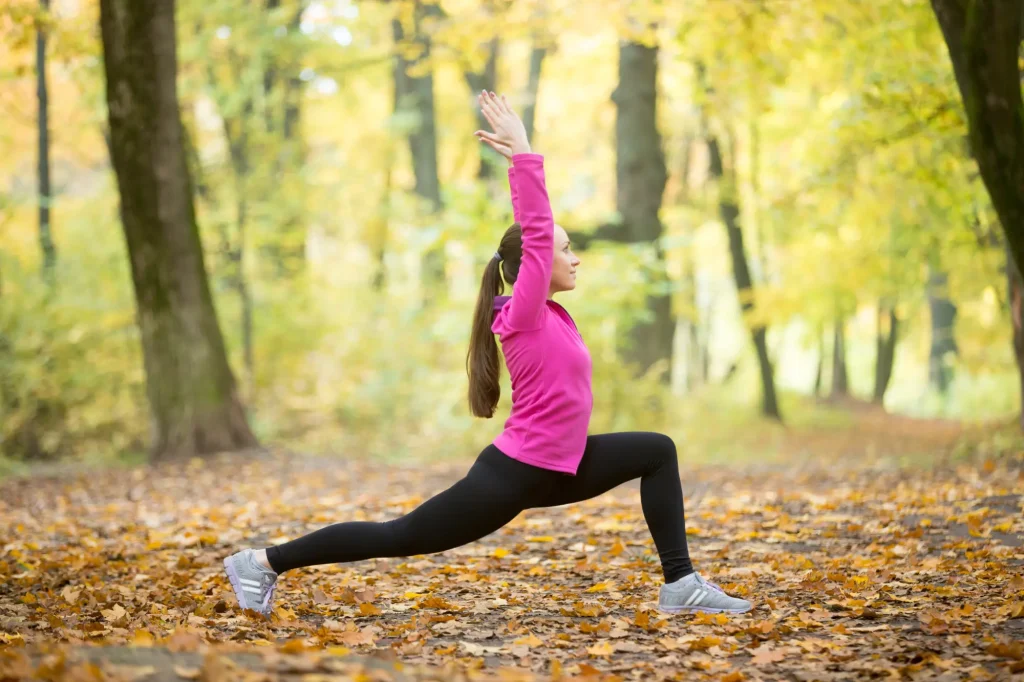
Step 4-5 feet back with your left foot. Your right foot remains in front of your left. Point your left foot slightly outward (about 45 degrees). Keep your heels in line.
Bend Your Front Knee
Bend your right knee until it is directly over your ankle. You want your thigh to be parallel to the ground. Keep your left leg straight.
Raise Your Arms
Extend your arms overhead. Make sure they are straight and shoulder-width apart. Your palms can be facing each other or touching.
Use Your Core
Squeeze your abs to support your lower back.
Square Your Hips
Rotate your hips around so that they face forward, as if your hips are pointing toward the front of your mat.
Common Mistakes to Avoid
Unaligned Hips
Ensure your hips are facing forward. That is critical for great alignment.
Arching the Lower Back
Do not allow your lower back to arch too much. This can be avoided by engaging your core.
Front Knee Not Over Toes
Do not let your front knee go over your toes. This can strain your knee.
Collapsed Chest
Open and lift up your chest.
Your Shoulders Are Tense
Let your shoulders drop. (Do not let them crawl up your ears.)
Modifications and Variations
If Warrior I is hard for you, there’s a variation:
The Solution
Shorten the Stance: The distance between your feet should be decreased. This makes balancing easier.
Use a Wall
Work on the pose with your hands on a wall for support.
Keep Your Arms Low
If putting your arms over your head doesn’t work for you, keep your hands on your hips.
For more challenge, try the following variations:
- Super Deep Lunge: Make your front knee bend more.
- Backbend Variation: Slightly arch your back and look upward.
- Eagle Arms: Instead of bringing your arms overhead, cross them in front of you.
Precautions
Warrior I is typically a safe pose, but be cautious if:
- You have injuries to your knees or ankles. Avoid deep lunges.
- You have lower back pain. Keep your core tight and don’t overarch.
- You feel dizzy. A helpful option is to practice near a wall.
Always listen to your body. Stop if you feel pain.
Tips for Beginners
- Warm up before practicing it to prepare your muscles.
- Focus on your breath. Inhale as you raise your arms, exhale as you remain in the pose.
- Practice in front of a mirror. This allows you to verify your alignment.
- Take it slow. Avoid going directly into the complete pose.
Mythology Behind the Pose
The tale of Virabhadra provides a spiritual aspect to this asana. Virabhadra is an avatar of Lord Shiva. He was born of Shiva’s rage and grief. In fact, Shiva dispatched Virabhadra to destroy Daksha’s yajna (sacrifice) in the wake of Sati’s unfortunate demise. Warrior I symbolizes the arrival of Virabhadra with determination and strength.
How to Add Warrior I into Your Practice
Warrior I is versatile. It can therefore be integrated into a number of yoga sequences:
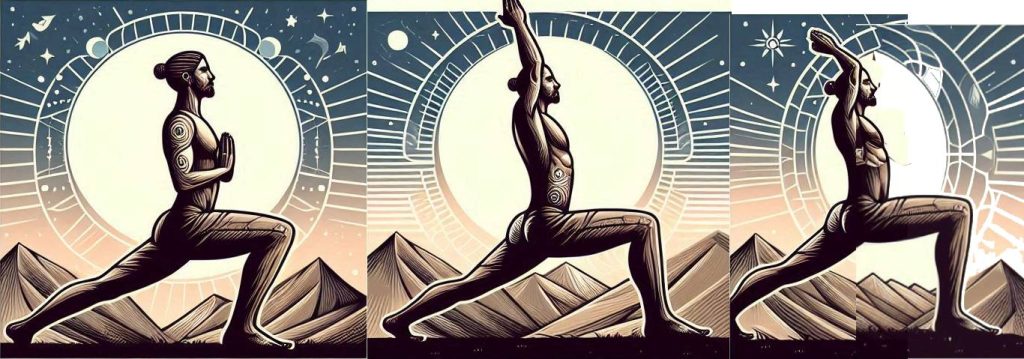
- Sun Salutation (Surya Namaskar): Add Warrior I after stepping forward in the lunge.
- Standing Pose Sequence: Add Warrior I to Warrior II and Warrior III for a full-body burn.
- Cool-Down Stretches: Use it to stretch your hips and legs after some intense poses.
Conclusion
Virabhadrasana I is a strong pose. It builds your body, perfects your posture, soothes the mind. You will feel more grounded and rejuvenated with regular practice. Just remember to concentrate in alignment and respiration. You will eventually conquer this pose and reapply its benefits in your life. For newbies and seasoned yogis alike, Warrior I is crucial to your yoga practice.
An Inspiration:
A long time ago, in a tiny village in the green mountains of India, lived a yogi called Ravi who was known for his expertise in the ancient practice of yoga. Each morning, as dawn broke along the horizon, Ravi made his way to a tranquil clearing within the forest to practice his asanas. One of his favorite poses was Virabhadrasana I, or Warrior I, a powerful and beautiful pose that represented strength and resolve.
Ravi flowed through a series of postures as if his body were made of liquid, each gesture extending into the next with crisp clarity. He found a sense of peace and balance in the rhythm of his breathing, as though the air around him held the essence of the earth and sky. The villagers would ooh and ahh watching Ravi with his daily practice, encouraged by his talent.
One day, a few travelers who were passing by the village heard about Ravi’s amazing talent and came to learn from him. Moved by their earnestness and desire to learn, Ravi agreed to mentor them and show them the wonders of yoga. And so together, they learned Virabhadrasana I, and became the warrior spirit embodied in their own selves, finding strengths and courage they never knew they had. Thus, through his practice and dedication to the spirit of yoga, reverberations of harmony and love were felt in the heartbeats of all he touched, like ripples emanating from one who is firmly seated in the peace of existence.